A practical guide to wraparound extensions for semi-detached homes

If you live in a semi-detached property and are running out of space, a wraparound extension can be one of the most effective ways to expand without relocating. Before diving into design ideas or permissions, it helps to understand how this type of home affects what’s possible.
Understanding semi-detached homes and shared boundaries
A semi-detached house is defined by one shared wall with a neighbouring property, with the other side fully detached. Unlike fully detached homes, this shared boundary introduces additional considerations when extending — particularly around structural work, neighbour consultation, and legal agreements.
These factors become especially relevant when planning a wraparound extension, as this type of build often interacts with both the side and rear boundaries of the property.
Is it possible to extend a semi-detached house?
In most cases, yes. Semi-detached homes are often well suited to extensions thanks to:
- Side access or unused space along one boundary
- Rear garden depth that allows outward expansion
Among the various extension types available, wraparound designs are particularly popular because they maximise ground-floor space while preserving some outdoor area.
Why wraparound layouts work well for semi-detached properties
A wraparound extension combines a side extension with a rear extension to form an L-shaped layout. This configuration works especially well for semi-detached houses, which often have underused side space and a modest rear garden.
Homeowners typically choose this option to:
- Create an entirely new room or significantly enlarge existing ones
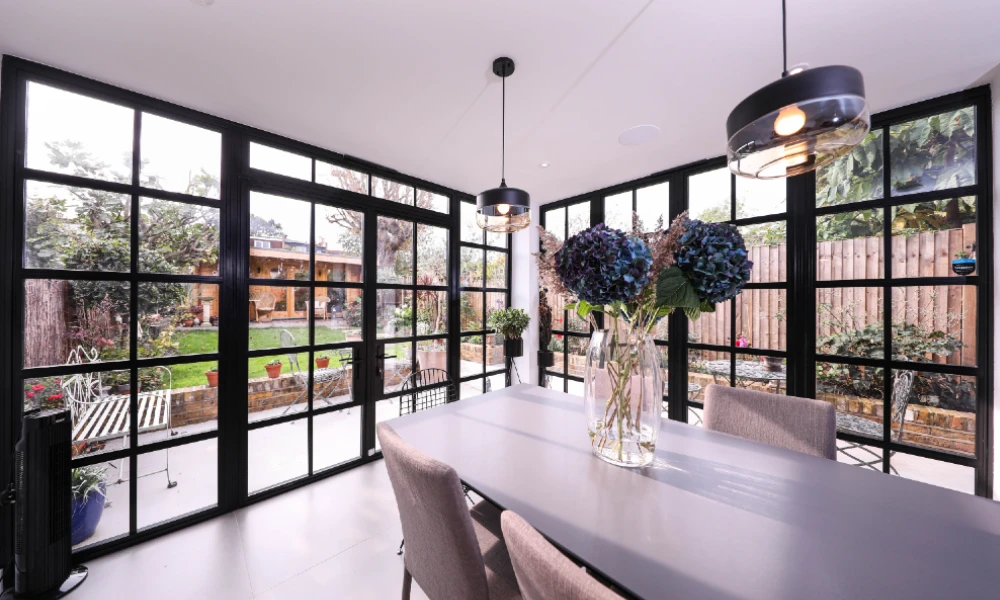
- Increase daylight through better glazing opportunities
- Improve the connection between indoor spaces and the garden
- Gain flexibility in layout without consuming the entire garden
When designed carefully, the result feels like a natural continuation of the original house rather than an add-on.
Typical cost range for semi-detached wraparound extensions
There’s no one-size-fits-all price for an extension. Final costs depend on several variables, including:
- Overall size and footprint
- Structural complexity
- Materials and finishes
- Construction programme and contractor choice
That said, a semi-detached wraparound extension commonly falls within the region of £120,000–£150,000. This should be treated as a general guide rather than a fixed figure, as individual projects can vary significantly.
Planning permission: what usually applies?
Wraparound extensions are larger, more complex projects, so they typically require planning permission.
Even when permitted development rights apply, the side and rear portions of the extension are assessed separately. One common restriction is that rear extensions under permitted development cannot extend more than 3 metres beyond the original rear wall.
Because planning policies can be nuanced and differ by property type and context, professional input can significantly improve your chances of approval and help avoid costly redesigns later on.
Party wall agreements for semi-detached extensions
If your property shares a wall with a neighbour — which most semi-detached homes do — a party wall agreement is often required.
You’ll generally need to serve notice if you plan to:
- Work on or near the shared wall
- Build close to the boundary
- Excavate within 3 metres of the neighbouring structure
Neighbours must be given at least two months’ notice before work begins. If they don’t consent, surveyors may need to be appointed, with the associated costs typically covered by the homeowner carrying out the work.
Final thoughts
A wraparound extension can be a highly effective way to future-proof a semi-detached home, offering flexibility, light, and improved flow — provided the planning, permissions, and neighbour considerations are handled properly.
Understanding these factors early allows you to design with confidence and move forward with fewer surprises once work begins.
.png)

.jpeg)



With over 500+ projects completed nationwide.



