How a glass side return extension can transform natural light in your home

If your home feels darker than you’d like, especially along the side passage, a glass side return extension can make a dramatic difference. By replacing solid walls or roofs with carefully placed glazing, you allow daylight to travel deeper into your living space — often transforming how the entire ground floor feels.
Beyond brightness, glass helps soften the boundary between inside and out. Whether you’re looking into a garden or simply opening up a narrow footprint, this connection to daylight and the outdoors can make your home feel calmer, more spacious, and easier to enjoy day to day.
The key is choosing the right balance of glass, structure, and privacy for how you actually live.
Understanding the cost of a glass side return extension
There’s no fixed price for a glass side return extension. Costs vary widely depending on the size of the space, the amount of glazing used, and the level of finish you choose.
As a general guide, many homeowners find that projects fall within a broad range of £80,000 to £140,000. This can move up or down depending on several factors, including:
- The width and length of the side return
- Whether the roof is fully glazed or partially solid
- The type of glass specified (standard, thermal, self-cleaning)
- Structural complexity and existing ground conditions
- The quality of doors, frames, and internal finishes
Because glass plays both a structural and visual role, early planning is essential to avoid cost surprises later on.
Planning permission and permitted development considerations
Many side return extensions can be built under permitted development, meaning formal planning permission isn’t always required. However, this depends on meeting specific size and design limits.
As a general guide, a side return extension may fall within permitted development if it:
- Sits to the side or rear of the house, not the front
- Uses materials similar in appearance to the existing property
- Covers no more than 50% of the original garden area
- Is no wider than half the width of the original house
- Stays below 4 metres in height (or 3 metres if close to a boundary)
- Does not exceed the existing roofline
Some properties have additional restrictions, particularly flats, listed homes, or those with special planning conditions. When in doubt, it’s always safer to confirm before starting work.
Ways to use glass to maximise light and space
Glass doesn’t have to mean an entirely transparent box. The most successful side return extensions use glazing thoughtfully, combining light with comfort and privacy.
Using a glazed roof to brighten the centre of the home
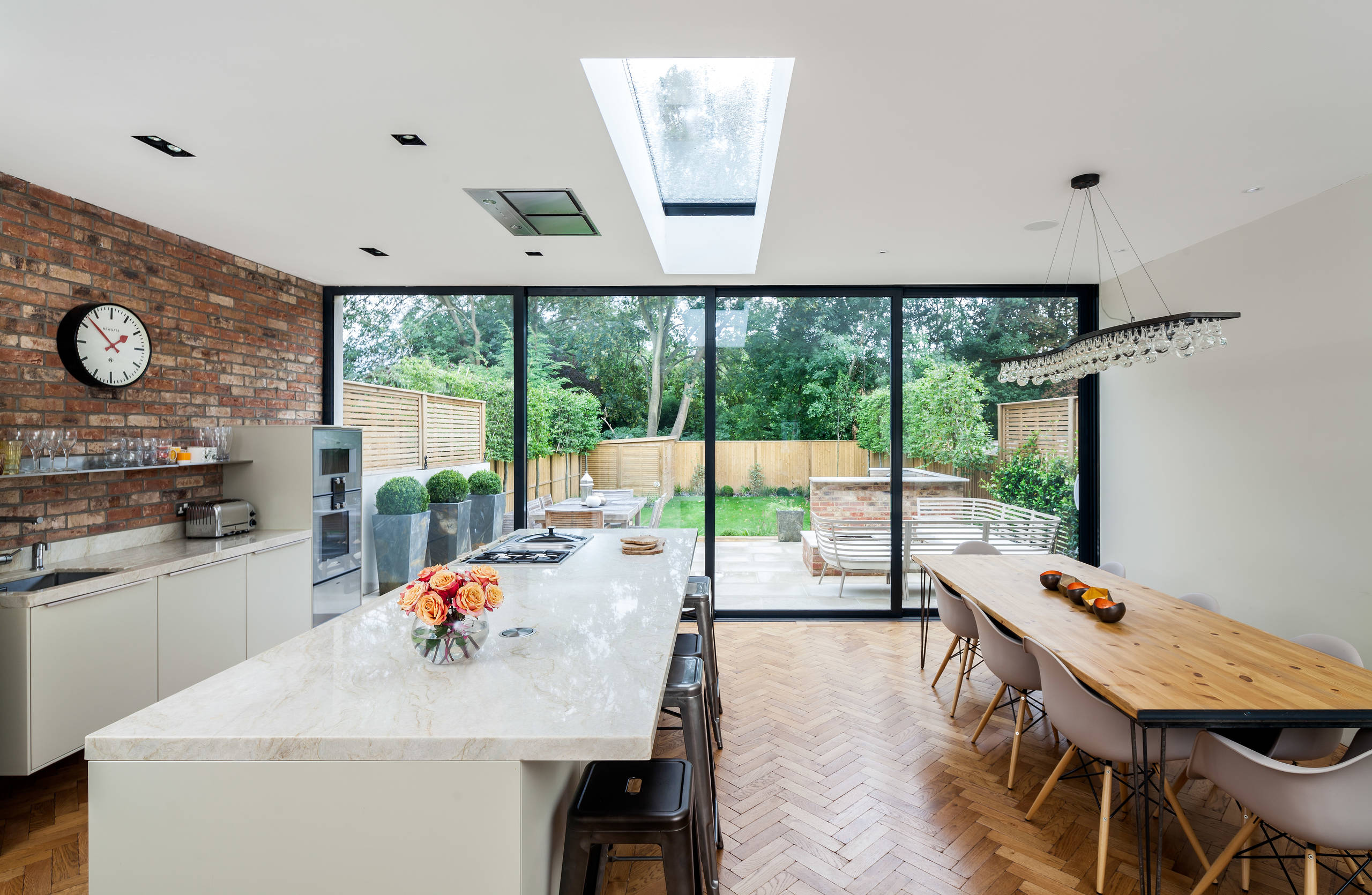
A glass roof is one of the most effective ways to bring daylight into areas that previously relied on artificial lighting. It allows light to enter from above, spreading evenly throughout the space.
Practical considerations include heat control, ventilation, and maintenance. Modern glazing options can reduce glare and heat gain, while self-cleaning glass can help keep upkeep manageable.
Opening the space with glazed doors
Large sliding or folding doors can turn a side return into a natural extension of the garden. Slim-framed designs allow light to flow freely while still providing strong thermal performance.
These doors work particularly well for kitchen and dining spaces, where flexible indoor–outdoor use makes everyday living and entertaining easier.
Adding skylights for targeted daylight
Skylights are a useful option when a fully glazed roof isn’t appropriate. They can be positioned to highlight specific areas, such as worktops or seating zones, without overwhelming the space.
Shutters or integrated blinds are worth considering where direct sunlight could cause overheating during warmer months.

Choosing frames that suit your home
Frames play a big role in how a glass side return extension looks and feels. Thinner frames maximise light, while colour and material choices can either blend into the existing house or create a subtle contrast.
This decision affects not just appearance, but also durability and long-term maintenance — so it’s worth considering early in the design process.
Common mistakes to avoid with glass extensions
- Using too much glass without considering heat control
- Forgetting privacy where neighbouring properties are close
- Underestimating cleaning and maintenance access
- Treating glazing as decorative rather than structural
- A well-planned design balances openness with comfort, ensuring the space works throughout the year
Is a glass side return extension right for your home?
If your priority is improving daylight, opening up narrow spaces, and making your home feel more connected and enjoyable, a glass side return extension can be a powerful solution.
Like any home improvement, success comes down to careful planning — understanding costs, checking planning rules early, and choosing glazing that suits how you live, not just how it looks.
When done well, this type of extension doesn’t just add space. It changes how your home feels every single day.
.png)

.jpeg)


With over 500+ projects completed nationwide.



