Is stone flooring a good choice for your home?

Stone flooring has long been associated with timeless design, strength, and natural beauty. From soft, neutral limestone to dramatic marble finishes, it’s easy to see why many homeowners are drawn to it. That said, stone is a serious investment and comes with practical considerations that go beyond appearance alone.
Before committing, it’s worth understanding how stone flooring performs in everyday life, how it feels underfoot, and what it requires in terms of installation and maintenance.
Weighing up the benefits and drawbacks
Like any building material, stone flooring has strengths and limitations. Some disadvantages can be reduced with careful planning or by selecting the right type of stone for each room.
Advantages worth considering
- Stone flooring is extremely hard-wearing and can last for decades, often a lifetime
- With the correct products, cleaning and general upkeep are straightforward
- When installed correctly, stone copes well with moisture and is resistant to damp
- Stone conducts heat efficiently, making it well suited to underfloor heating and cooler during warmer months
- Many buyers view stone floors as a premium feature, which may enhance resale appeal
- A wide range of colours, finishes, and textures makes it easy to match different interior styles
Potential challenges to be aware of
- The structure beneath the floor must be strong enough to support the weight of stone
- Hard surfaces can feel unforgiving for children and pets
Stone flooring can be costly, especially when combined with additional elements like underfloor heating - Without heating, stone can feel cold underfoot
- Some finishes may be slippery in wet areas if the wrong stone is chosen
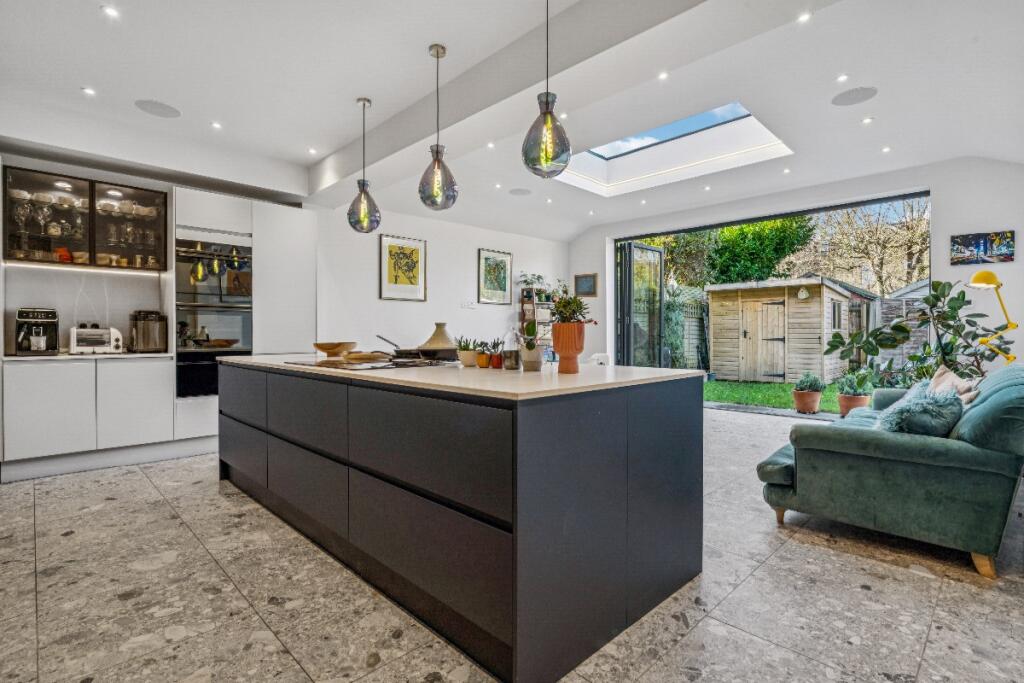
Popular stone flooring options explained
Natural stone comes in many forms, each with its own look, performance, and level of maintenance. Choosing the right type depends on how and where the floor will be used.
Limestone
Limestone is widely used and available in a broad range of colours, including pale whites, greys, warm honey tones, and deep browns. Density can vary, so higher-density options tend to be stronger and more durable. Its fine, even texture can be left matte or polished for a smoother, more refined appearance.
Slate
Slate is often chosen for its affordability and natural, textured finish. It can be supplied with a smooth surface or a riven finish that creates a more rustic look. While visually appealing, heavily textured slate can be slightly more difficult to clean due to its uneven surface.
Granite
Known for its distinctive mineral patterning, granite offers excellent durability and comes in a variety of finishes. Polished granite can be visually striking, but in bathrooms or wet areas it’s important to select a non-slip surface. Lower-cost options are usually limited in colour and tile size.
Marble
Marble is associated with luxury, but it requires careful handling. As a porous material, it can absorb moisture and stain easily, particularly when exposed to acidic substances. This makes it less suitable for kitchens. Professional installation is recommended, along with regular sealing to protect the surface.
Maintaining stone floors properly
Stone floors are relatively easy to care for when treated correctly. The key is avoiding standard household cleaners, many of which are acidic and can damage the surface over time. Instead, a pH-neutral cleaning product should always be used.
It’s also important to confirm whether the stone has been sealed during manufacturing. If not, sealing will be essential to prevent staining. In most cases, sealants need to be reapplied every two to three years, though this varies depending on the stone type and usage.
Key points to take away
- Stone flooring offers exceptional durability and long-term visual appeal
- Installation costs can be high, and underfloor heating is often added for comfort
- The existing floor structure must be capable of supporting the additional weight
- Correct cleaning products and periodic sealing are essential for longevity
.png)

.jpeg)



With over 500+ projects completed nationwide.



